
Industry 4.0 CNC Busbar Machines: Connectivity Evidence Buyers Should Demand
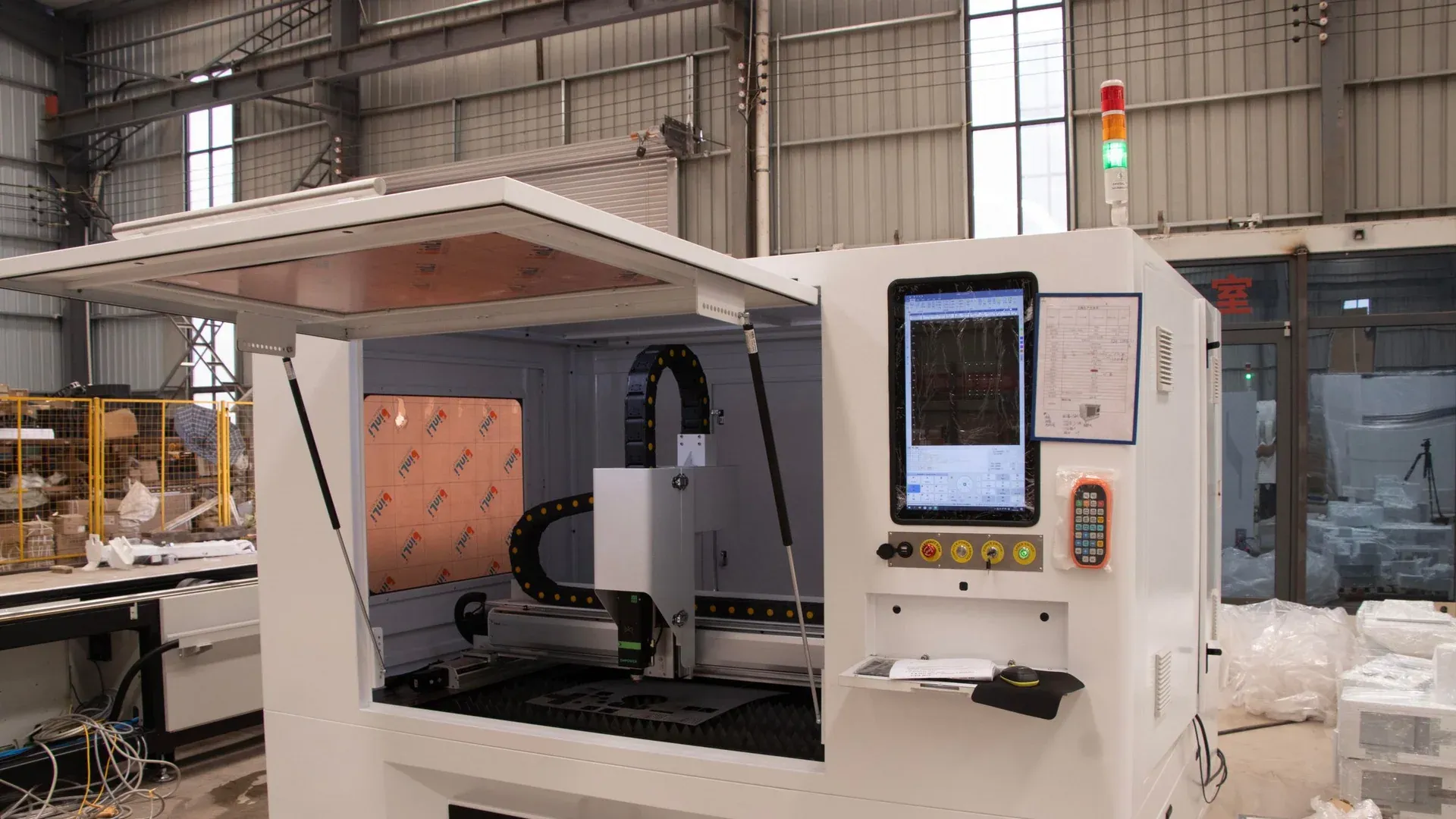
An Industry 4.0 CNC busbar machine is not defined by a touchscreen, a network connector or a remote-support application. A useful purchasing specification names the data that enters the machine, the data that leaves it, the interface used, the people allowed to change it and the recovery method when the network or software is unavailable.
This distinction answers a growing class of buyer queries about “high-end” busbar systems that connect to modern factory software. The evaluation should remain evidence-based: watch the supplier process a buyer drawing and export agreed production data. Do not accept an architecture diagram without a working demonstration.
Divide connectivity into five testable layers
Use separate acceptance rows for each layer. A machine can perform well in one and have no capability in another.
| Layer | Procurement question | Evidence to request |
|---|---|---|
| Engineering input | Which drawing and part-data formats can be imported? | Buyer-file import and edit log |
| Process preparation | How are tools, sequence, nesting and NC code generated? | Simulation, tool mapping and released program |
| Machine execution | Which states, counters and alarms are available? | Live tag list with units and update behavior |
| Production record | How are job, part, material and result linked? | Export tied to a finished sample |
| Support and recovery | How are access, backups and restoration controlled? | User list, audit log, backup and offline restore test |
If a supplier answers one layer with features from another, the requirement is not closed. DXF import does not prove production traceability; remote desktop does not prove a supported machine-data interface.
Test the engineering-to-machine path
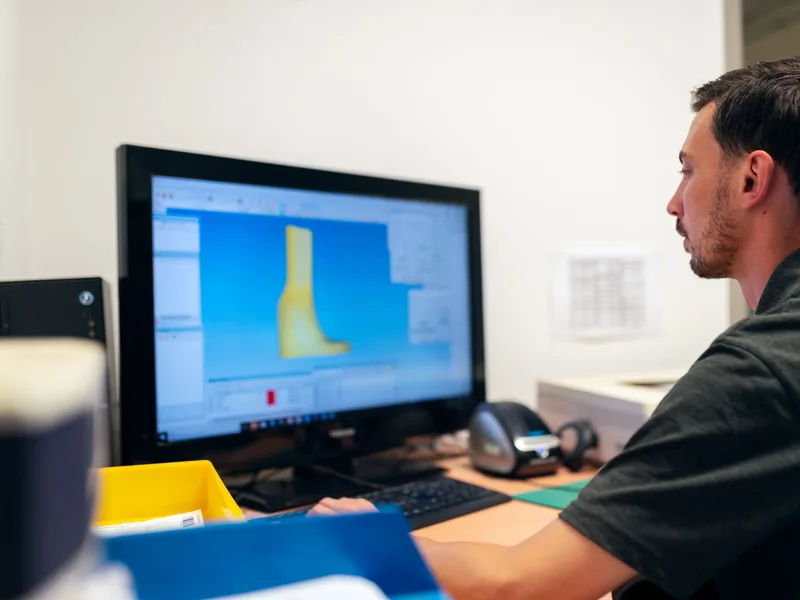
The CAD/CAM demonstration should start with a buyer file, not a supplier’s prepared sample. Include shapes and revision conditions that occur in production: round and oblong holes, slots, arcs, different datums, repeated parts and one unsupported or ambiguous entity.
Ask the supplier to perform the complete sequence:
- import the drawing or create the part;
- identify and correct unsupported geometry;
- map features to installed tools;
- set material and stock dimensions;
- arrange parts or operations where nesting applies;
- simulate the sequence and identify collisions or unreachable features;
- generate the NC program and job report;
- revise the drawing and show how the program changes.
This is a realistic capability set. For example, the Metalix cncKad busbar page describes DXF/DWG and EPLAN 3D busbar import, tooling, nesting, simulation, NC generation and reporting. That vendor example does not prove that another machine includes the same functions. It shows why each function should be named and demonstrated separately.
For the DHCNC-BP-60 punching and shearing machine, the quotation should identify the delivered drawing workflow, supported formats, license scope and any computer or postprocessor required. Product-page language is not a substitute for the buyer-file demonstration.
Specify machine data before selecting a protocol
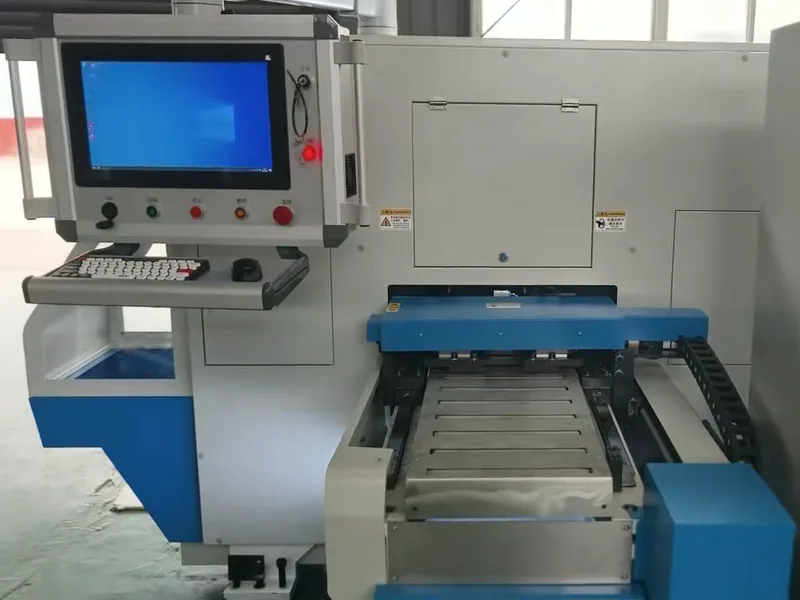
First define the information needed by production, maintenance and quality teams. Typical fields may include machine state, active job, part count, cycle start and end, program revision, tool identifier, alarm code and selected inspection result.
For every field, state:
- name and plain-language definition;
- data type, unit and valid range;
- event or sampling behavior;
- time source and time zone;
- identifier used to join it to job, part or material records;
- behavior after a restart, disconnect or program change.
Only then select an interface. Otherwise, a supplier can truthfully provide a protocol while exposing too little information to support the buyer’s use case.
The existing MES data-contract guide explains how to govern these fields after purchase. Keep that implementation work separate from the present buying question: can the offered machine produce the agreed data in a repeatable, documented way?
Treat OPC UA and MTConnect as specifications, not badges
OPC UA can carry structured industrial information and services, while MTConnect defines manufacturing-equipment observations and models. The OPC UA for Machine Tools specification and the MTConnect OPC UA Companion Specification illustrate how a protocol, a domain model and a specific implementation must align.
A quote that says only “OPC compatible,” “MTConnect ready” or “open API” is incomplete. Ask for:
- exact standard and version;
- server or adapter responsibility;
- endpoint and security configuration;
- implemented data model and tag list;
- read-only versus write capability;
- licenses, certificates and renewal obligations;
- conformance or interoperability test evidence.
Do not require a fashionable protocol when a simpler controlled export meets the business requirement. Also do not accept a proprietary database dump when the buyer needs stable, documented interoperability.
Keep remote support under buyer control
Remote access is a service path, not the same thing as machine integration. The buyer should approve when a connection is opened, who can use it and what actions are logged. The machine must retain safe local control when the connection is unavailable.
Require named accounts rather than shared passwords, role-based permissions, an access log, a defined patch owner and a removable-media procedure. Clarify whether the supplier can upload controller logic or change safety-related parameters remotely. If so, define authorization and rollback.
The backup package should include the controller program, HMI project or runtime backup, machine parameters, tool library, postprocessor where applicable, license records and restore instructions. Test the restore on an agreed spare device or controlled image when feasible.
Run a 60- to 90-minute evidence demonstration
A short structured test exposes more than a long slide presentation. Use this sequence:
- import one buyer drawing and generate a released program;
- produce a sample and link it to the program and job identifiers;
- view or export agreed state, count and alarm data;
- create one controlled alarm and show its timestamp and recovery record;
- revise the part, preserve the prior revision and run the new one;
- disconnect the network and demonstrate safe local production;
- restore a backed-up program or configuration to the agreed test point.
Record screens, filenames, versions, manual edits and unsupported conditions in the FAT protocol. If an integration function is planned but not yet installed, classify it as an open item with a responsible party and acceptance date.
Write connectivity into the commercial scope
The CNC busbar machine RFQ guide should be used to place each digital deliverable in the supplier response. State whether software, licenses, adapters, engineering hours, network hardware, certificates, documentation and site integration are included.
Then connect the digital requirement back to the machine-selection guide. Connectivity has value when it supports a defined production or maintenance decision. It should not make a suitable mechanical process secondary, and it should never remain an untested marketing adjective.
Frequently Asked Questions (FAQs)
What makes a CNC busbar machine Industry 4.0 ready?
The term becomes useful only when the quote defines the actual functions: drawing import, program generation, machine-state and production data, named interfaces, user control, event logs, backups and a secure support method. A touchscreen or Ethernet port alone is insufficient evidence.
Should a busbar machine support OPC UA or MTConnect?
It should support the interface and information model required by the buyer's architecture. OPC UA and MTConnect are possible industrial approaches, but neither should be assumed; name the version, exposed data and conformance evidence in the contract.
How can a buyer test DXF import before ordering?
Provide buyer-selected drawings with arcs, slots, datums and revisions. Ask the supplier to import them, map tools, resolve unsupported entities, simulate the route, generate the machine program and reproduce the report while recording every manual edit.
What cybersecurity controls should be checked on a connected busbar machine?
Check named user accounts, role permissions, approved remote-access workflow, logs, network settings, patch responsibility, removable-media controls, backups and a documented offline recovery path. Connectivity should not be required for safe local production.
DHCNC-BP-60 CNC Punching & Shearing Workstation
Discover details, parameters, standard dies packages, and factory quotes.